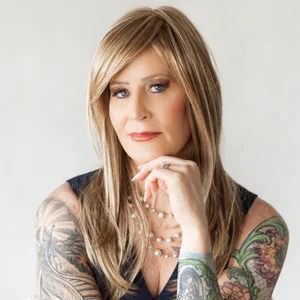
Forged and Stitched
I was deeply comfortable in my masculinity.
I had a good life. A strong marriage. My kids were doing well. My oldest daughter had just gotten married. I was at the top of my career field. I owned a paid-off ranch. My days were filled with cattle, motorcycles, and the physical work that comes with ranch life. I had never struggled with sensitivity either; that was already integrated.
I wasn’t confused. I wasn’t broken. I wasn’t running from anything.
The decision to transition was a choice. I never felt like I was in the wrong body. I never felt intellectually dishonest. I simply wanted to live my life as a woman, and I believed I knew how to do that. I never experienced myself as a transgender person. I experienced myself as someone who transitioned.
When I made that decision, the pendulum swung far. It was intentional.
I wanted to embrace the feminine. Fashion had always mattered to me, going back to my teens. I paid attention to everything from head to toe. This was about clarity. I thrived in that expression, before and after. In my career, and eventually in fashion itself when I retired from pharma to lead boutiques. It aligned. I was thrilled. I was mastering something new.
Nothing about that chapter feels like a mistake.
My belonging never wavered. Family, friends, colleagues, clients-everyone was supportive. That didn’t always mean agreement, but it did mean acceptance. My identity never cost me love. I was deeply loved on all fronts.
Then, masculinity was simply gone, not ideologically, but as a felt experience. There were moments it resurfaced in conversation with friends or guys who had known me forever. But the physicality, the groundedness, the strength, and the sexuality had all gone quietly. Missing them didn’t mean regret. It meant longing, without judgment.
That realization sharpened when someone tried to define me publicly. As if my identity were a secret. It was disturbing, but what followed surprised me. Clients and customers were largely indifferent. It felt like old news to them. There was no scandal. No reaction. They had already chosen, long ago, not to react at all.
Not long after, I was called into work unexpectedly. I had no time to change. I showed up in boots, jeans, a T-shirt, and a denim jacket—the way I would have dressed working on the ranch. That day, I received more compliments than I had in a long time. I was comfortable. I still looked the part of a chic stylist. Western chic. I loved it.
That was the moment I realized something had settled.
The pendulum hadn’t needed to swing back to where it started, or stay where it had gone. It had simply come to rest, no longer in performance.
Masculinity was returning, and not at the expense of femininity. Nothing was lost. Nothing softened or diminished. My leadership was solid, and my ability to look chic didn’t cancel out. Chic doesn’t cancel strong. I didn’t have to explain, perform, or prove anything.
I began returning to the things I loved. Old rock and roll. Learning new instruments. Returning to the piano. Strength training, cardio, and feeling strong again. Endurance, artistry, and presence.
Then, I was given a photo of something my grandfather had made. He had embroidered pink pillows.
He was a blacksmith. He endured heat, iron, and physical labor. Endurance mattered to him. There was no contradiction in him—only skill and presence.
He didn’t have to balance anything. He simply was.
That’s when I understood I hadn’t invented this way of being. The integration I was living wasn’t just Jungian theory; it was in my blood. I had inherited it. It had been modeled long before I had language for it.
My grandfather didn’t need permission to be whole. Neither did I.
It was relief.
And relief, I’ve learned, is one of the clearest signs of alignment there is.